
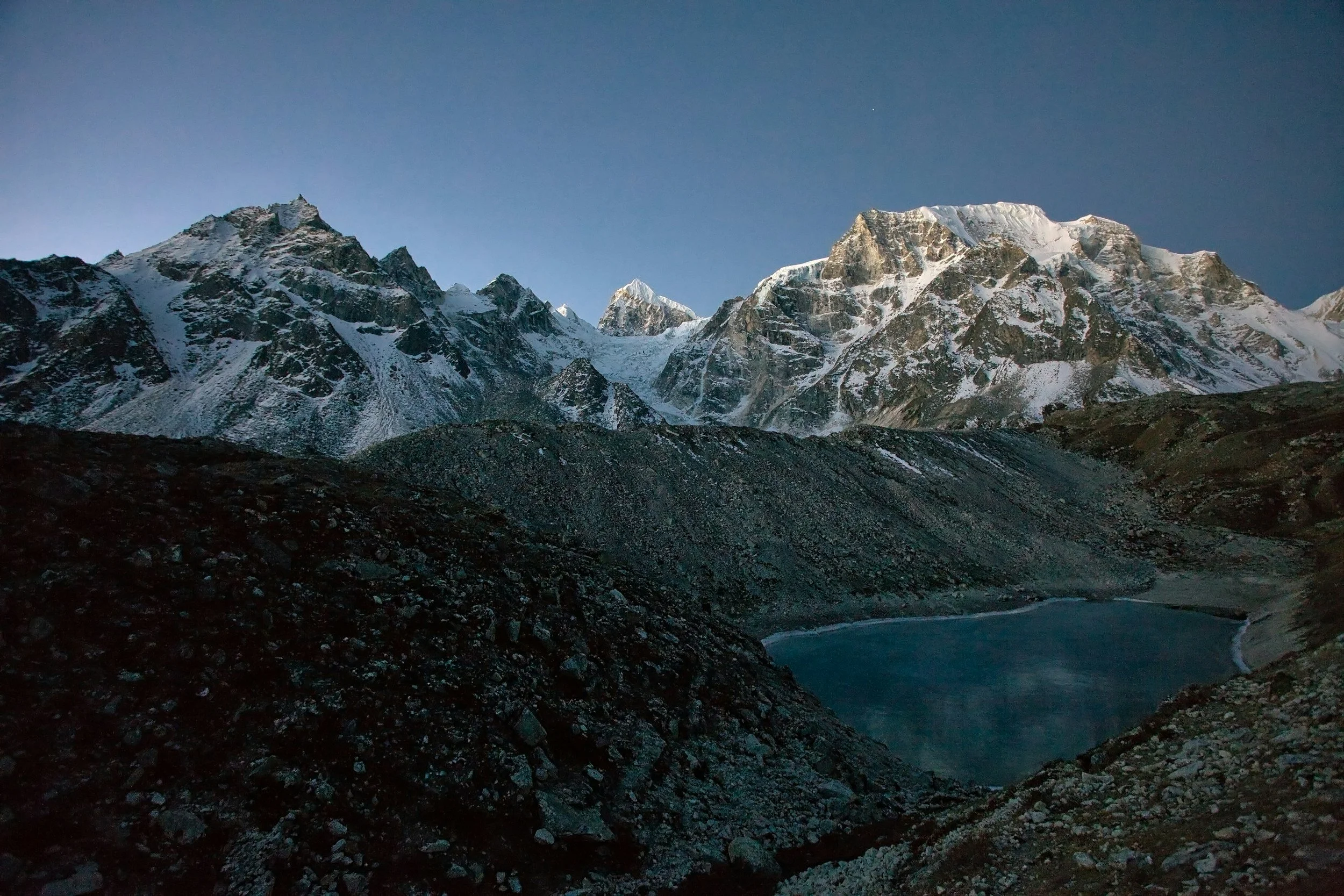
The Himalaya from the top down.
Trekking peaks are Nepal’s open secret. Real Himalayan summits above 6,000m — technically achievable with the right preparation, the right guides, and a genuine willingness to push beyond a base camp. Not mountaineering expeditions requiring years of technical experience. Not tourist walks. Something in between — and more rewarding than either.
CAT has been running trekking peak expeditions since 1989, with Sherpa climbing teams who know these routes at a level no Western guiding company can match. Island Peak, Mera Peak, Lobuje East — peaks that sit in the shadow of the world’s highest mountains and offer views that stop even experienced climbers in their tracks.
Every CAT Summit includes a £50 donation to Community Action Nepal, direct and transparent, as part of your booking.
All CAT Summits are conducted with experienced Sherpa climbing sirdars, ropes, crampons, ice axes and full safety equipment. Minimum 4 climbers per departure.
Trekking peaks are officially designated Himalayan summits where permits are obtainable without the cost and complexity of full expedition permits. They require basic mountaineering skills — crampons, ice axe, fixed ropes — but not years of technical climbing experience. With the right preparation and the right guides, they are achievable.
Comfort with crampons, ice axe and fixed ropes on steep terrain. These skills must be second nature before you arrive — not something you learn at altitude. We strongly recommend a UK winter skills course (Cairngorms, Snowdonia or similar) before booking. We can advise on suitable courses and providers.
Experienced trekkers who have been to altitude before and want more. People who’ve done EBC or Manaslu and are asking what’s next. Those who have done their winter skills course and want to put it to use in the most extraordinary setting on earth. If that sounds like you, you are ready to talk.
Choose your peak
Everything you need to reach the top
An experienced climbing sirdar who has summited these peaks many times. Not a trekking guide with a climbing permit — a genuine Himalayan climbing specialist.
High camp tents, cooking equipment, fuel and food for summit camp. All technical equipment — ropes, snow stakes, ice screws — provided and managed by the Sherpa team.
Fixed ropes, ladders where required, and all group technical equipment. You bring your personal gear (crampons, ice axe, harness) — we bring everything else.
Nepal Mountaineering Association peak permits, national park fees, restricted area permits where applicable. All arranged by us before departure.
Your main bag carried throughout the approach trek. You carry only a climbing pack on summit day. Our porter team is paid fair wages and fully equipped — a CAT principle since 1989.
Every CAT Summit booking includes a £50 direct donation to Community Action Nepal. Stated on your booking confirmation. Transparent, direct, meaningful.
In 1979, Doug Scott and his team prepared for the third ascent of Kangchenjunga by pioneering a trekking route to its north base camp. That route is now one of the most spectacular remote treks in Nepal — and CAT still runs it. When you trek to Kangchenjunga with us, you follow the footsteps of the man who founded this company.
Add image here
Recommended: Sherpa climbing
team on summit ridge or fixed ropes
The best Sherpa climbing sirdars in Nepal.
CAT’s ground operation is run by Bhai B. Tamang and his team in Kathmandu — experienced climbing sirdars and Sherpa teams who have been guiding these peaks for decades. These are not guides hired for the season. They are specialists who have summited Island Peak, Mera Peak and Lobuje East more times than they can count, in every season and in every condition.
When you climb with CAT, the person leading you to the summit is the same person who trained the porter team, who knows the approach route intimately, and whose community you pass through on the way up. That connection matters.
All climbing sirdars are licensed by the Nepal Mountaineering Association
Wilderness First Responder trained with altitude emergency protocols
Emergency oxygen carried on all summit attempts above 5,500m
Fair wages, insurance and equipment — a CAT principle since 1989
The summit is closer than you think
Tell us which peak interests you, when you’re thinking of going, and your climbing background. We’ll give you an honest assessment and build the trip from there.