
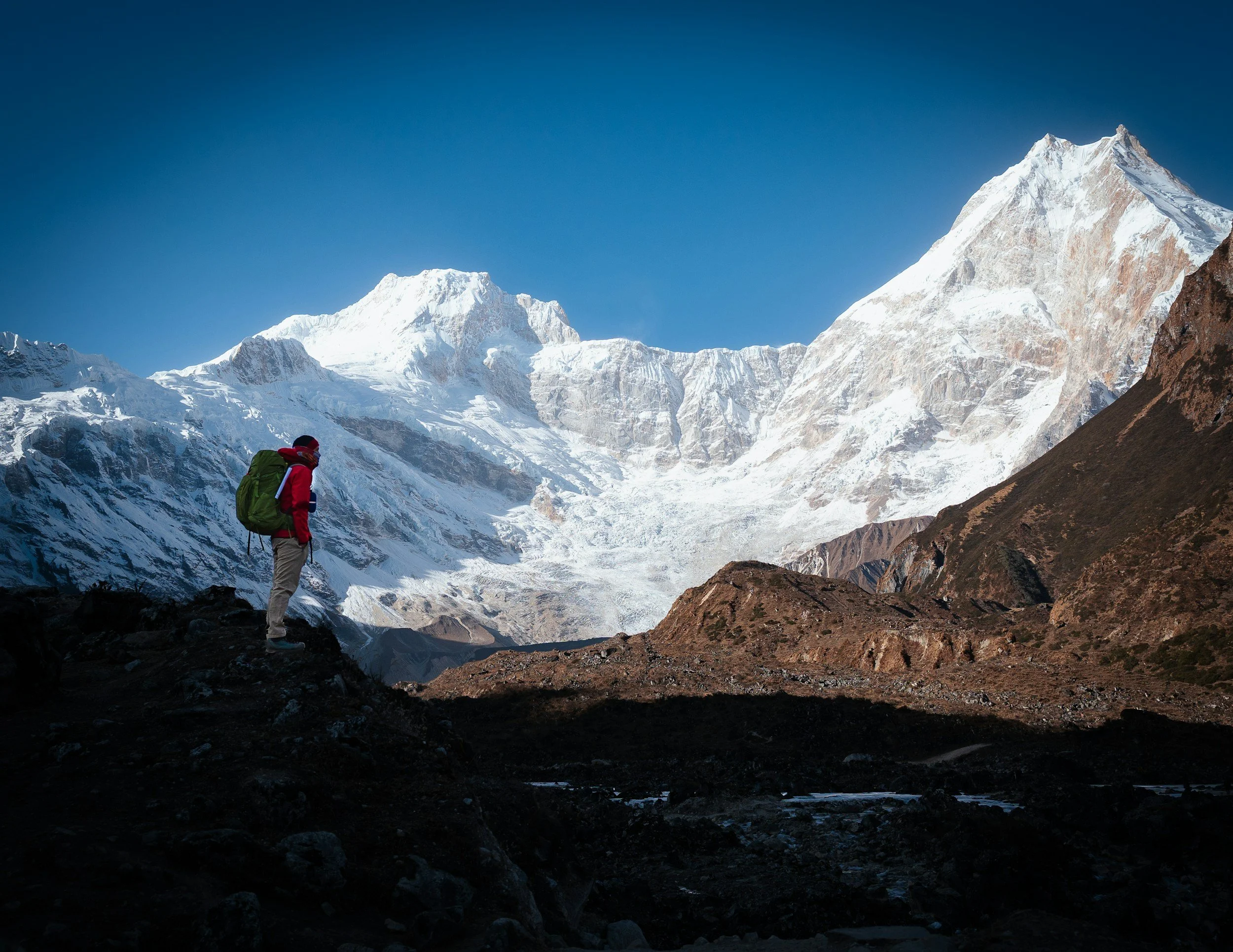
A circuit of one of the most remote mountains on earth
Standing at 8,163m in central Nepal, Manaslu is the world’s eighth highest peak. The circuit around its base is compared to the Annapurna Circuit for its magnificent and extraordinarily varied scenery — but with a fraction of the footfall. This is one of Nepal’s last great trekking frontiers.
From the sub-tropical Budhi Gandaki Valley, the route winds through deep gorges before climbing to a remote, desert-like region bordering Tibet. Here, in hidden valleys, the people are Buddhists of Tibetan descent living in villages with names like Li, Lho and Sho. Pagoda gates, prayer walls and gompas are among the architectural wonders along the way, set against breathtaking views of Manaslu.
The 5,160m Larkya La pass brings further rewards as a dazzling array of Himalayan peaks come into view. And throughout the trek, you’ll pass health posts built and operated by our sister charity Community Action Nepal — a constant reminder of why this company has been running these routes since 1989.
You will pass CAN health posts in Bihi, Lihi, Lho and Samagaon on this trek — facilities that CAT’s bookings help sustain. This is trekking with purpose.
Land only · flights not included
Enquire to hold your place
Minimum 4 guests per departure. Maximum 12. Not ready to commit? Enquire to hold a provisional place — no payment required.
Everything taken care of
- 2 nights hotel accommodation in Kathmandu (arrival & departure)
- 14 nights in the best local tea houses and lodges on the trail
- Full board throughout — all meals on the trail
- Welcome dinner in Kathmandu
- Celebratory farewell dinner
- Expert Sherpa lead guide throughout
- Experienced assistant guides — 1:4 guide-to-guest ratio
- All porterage — your main pack carried daily
- All transfers by private 4WD throughout
- All conservation and national park fees
- Manaslu Conservation Area and Restricted Area permits
- Group first aid kit and emergency oxygen
- CAT pre-departure information pack
- £50 Community Action Nepal donation per person
What to budget for
- International flights to/from Kathmandu
- Nepal visa (approx. £30 / $50 USD, obtained on arrival)
- Travel and trekking insurance (mandatory)
- Personal spending money and tips
- Optional excursions in Kathmandu
- Alcoholic drinks and bottled water on trail
- Personal trekking equipment
- Emergency evacuation costs (covered by insurance)
Insurance is mandatory. We require comprehensive travel and trekking insurance including emergency helicopter evacuation cover to 5,500m. We’re happy to recommend providers.
18 days around the world’s eighth highest mountain
Your full Manaslu itinerary
Namaste — and welcome to Kathmandu, the colourful capital of Nepal where ornately carved balconies mingle with beautiful shrines and temples. Our team meets you at the exit gate of Kathmandu airport with CAT’s traditional palm plate welcome and transfers you to your hotel. The rest of the day is yours to recover from the flight, explore the local markets, or simply rest. We meet as a group in the evening for introductions and a welcome dinner.
A full day to explore the fascinating city of Kathmandu — its temples, the old town of Thamel, the Boudhanath stupa, Pashupatinath temple. We use the morning for kit checks and permit finalisation. Optional excursions into the Kathmandu Valley can be arranged through our Nepal office. In the evening, a full briefing from our guides on the adventure ahead.
An early start for the long drive to Machá Khola in private 4WD vehicles. We stop for lunch at Arughat Bazaar. After lunch the road becomes rough, but the route is beautiful — very green, passing alongside rivers and hills covered in tropical forest. We arrive at the starting point of our trek at Machá Khola and check into our guesthouse for the night.
The trek begins. We cross a couple of ridges to reach Tatopani (‘hot water’) where natural hot water spouts emerge from beneath sheer cliffs. The rice fields are slowly giving way to fields of millet and buckwheat. After Tatopani we cross the bridge to the east bank of the river and continue to the Gurung village of Jagat. The Manaslu Conservation Area begins here — we present our trekking permits.
A shorter day from Jagat to Philim with tantalising views of the Shringi Himal (7,175m) to the north, close to the Tibetan border. After lunch there is time to explore the upper part of this Gurung village. The gompa sits about half an hour’s walk above the village. Philim is also home to the government-run regional health hub, which serves both the Nubri and Tsum Valleys — based here are two CAN-funded nurses and a laboratory technician.
Shortly after leaving Philim the trail divides and we bear left into the Nubri Valley. We have entered wholly Buddhist territory — mani walls, prayer flags, kanis (entrance gates) and prayer wheels now form part of the landscape. The day starts with a gradual ascent through beautiful primeval forest, with the thunder of the fast-flowing river below. We climb to the village of Bihi.
The trail rises gradually before becoming steeper, passing through landslides and wet areas. The Tibetan border is less than 10km north as the crow flies. The landscape keeps changing — increasingly barren and dramatic with many mani walls and stupas. We pass the gompa of Lihi and continue ascending through the stone gate of Sho village before reaching Lho, a beautifully situated village with walled fields of golden grain. From here, our first unforgettable view of Manaslu.
If weather allows, rise before dawn for the magical experience of watching the sun rise behind Manaslu from the outskirts of Lho — the light gradually creeping over the summit with the monastery in the foreground. Then a shorter walk to the large and beautiful village of Samagaon, where we spend two nights. En route we pass through Syaula, a village populated by Tibetan refugees who still arrive via the former trade route from Tibet.
A vital day to let our bodies adjust to altitude before the big push ahead. Options include: a walk toward Manaslu Base Camp for glacier and summit views; a Puja prayer service in the village gompa; or a longer walk to Pung Gyen Gompa at approximately 3,900m for excellent acclimatisation. Or simply rest, eat, and take in the extraordinary village life of this Tibetan Buddhist community.
The trail climbs through forest before opening out by a lake where cold winds pick up — warm layers are recommended. We follow the Budhi Gandaki northwest through yak meadows and long mani walls to Samdo, the last inhabited village before the Larkya La pass. From the edge of the village, watching down on our route from Samagaon, it’s common to spot a Lammergeier (bearded vulture) soaring overhead and playful marmots on the hillside below.
A rest day at Samdo, with an optional hike for those with energy. The Rui La pass (4,998m) sits on the Nepal–Tibet border and offers vast panoramic views of the surrounding mountains. Climbing high and descending to sleep is excellent acclimatisation preparation for the Larkya La. Those who prefer can explore Samdo and rest — it is all time well spent before tomorrow’s main event.
The moment the entire trek has been building toward. We rise very early and leave in the dark. The approach to the Larkya La is gradual and, on a clear day, the panoramic views from the top are extraordinary — some of the finest in the entire Himalaya. Most of the pass is snowy and the long, steep descent can be slow and demanding. We walk carefully and take time to absorb one of the world’s great mountain experiences. We arrive at Bhimtang, tired, exhilarated, and on the other side of the mountain.
A lie-in before the journey down. Through beautiful forest with great views of the Manaslu peaks behind us, we walk south along the Dudh Khola river — descending through moraines, yak meadows and along the river’s white beaches. The name Dudh means ‘milk’ and you will understand why when you see the water. We spend the night in Tilje. The circumnavigation of Manaslu is complete.
We trek down from Tilje through the Annapurna trail, passing through the checkpoint where our Restricted Area permits are checked, to Jagat. Then a 4WD drive to Besisahar for the night. The following day, a 6–8 hour drive back to Kathmandu. The rest of the day is free to shower, rest and celebrate.
A final day in Kathmandu to recover, explore, shop for last-minute souvenirs, and celebrate what you’ve just achieved. In the evening, a celebratory farewell dinner together — the best meal of the trip, for the best reason.
Transfer to Tribhuvan International Airport for your onward flight. Until next time, Nepal.
Where you’ll sleep
Accommodation on the Manaslu Circuit is in locally-owned tea houses and lodges throughout the trek — simple, warm, and genuine. In Kathmandu, we stay at the Hotel Malla, a CAT tradition since Doug Scott’s earliest expeditions. Tea houses on the trail are shared basis and offer a unique window into Himalayan life.
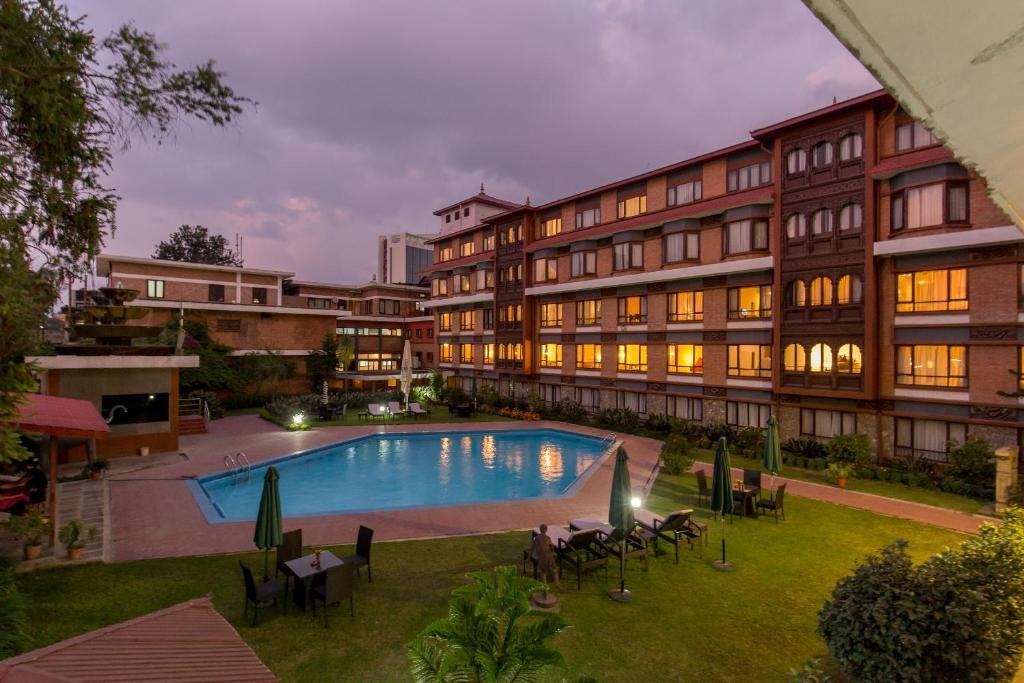 Kathmandu · Arrival & Departure
CAT’s Kathmandu base since Doug Scott himself stayed here on his earliest expeditions — a small piece of the company’s history we’ve carried forward ever since. We’ve negotiated a special room rate exclusively for CAT guests. Private rooms with en-suite bathrooms, Wi-Fi, and excellent breakfast, in a quiet garden setting close to Thamel. A comfortable, characterful base for your first and last nights in the city.
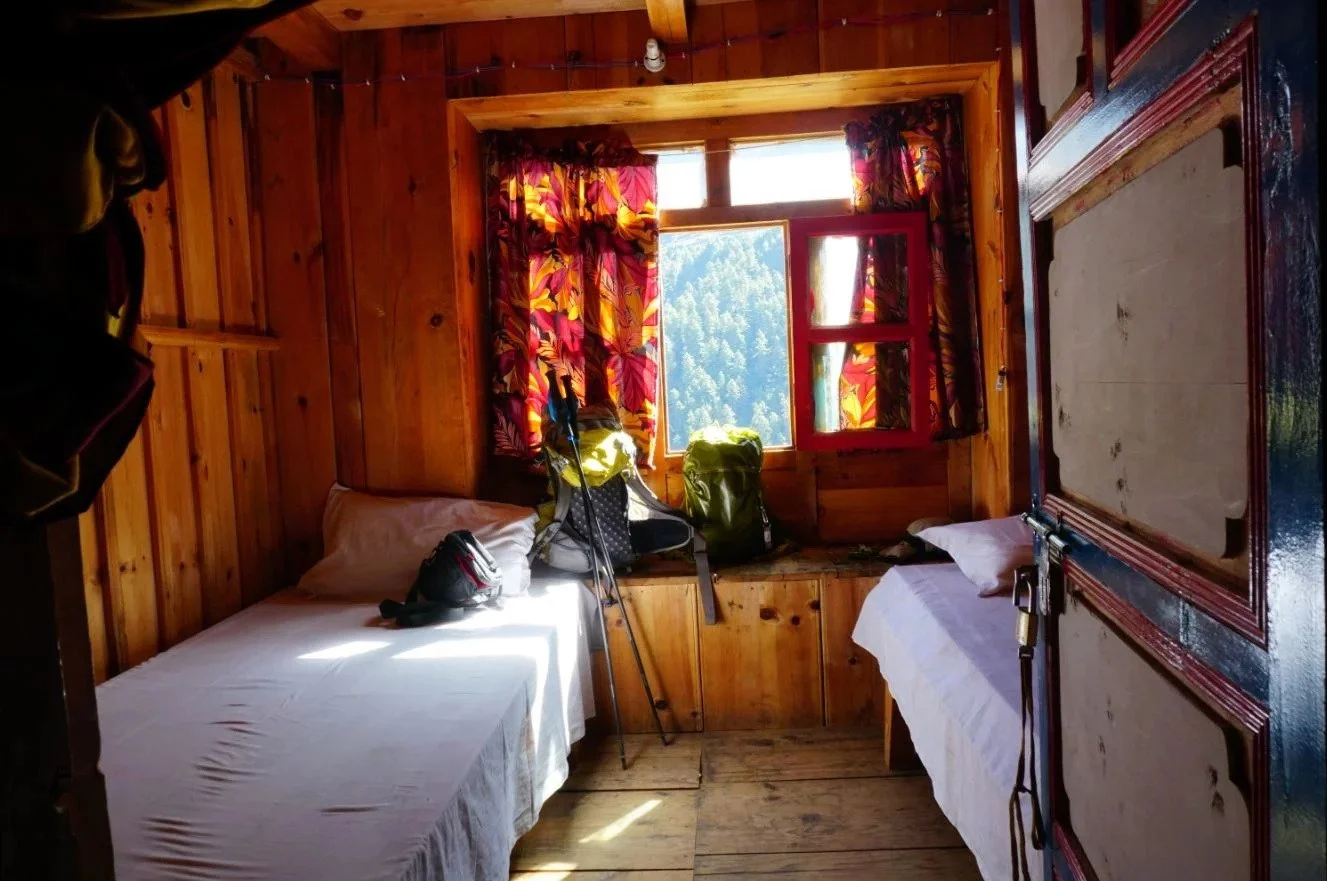 On the Trail · 14 Nights
Simple, locally-owned accommodation in the villages along the route. Basic rooms (typically twin or dormitory), communal dining rooms with wood fires, and the extraordinary hospitality of the Gurung and Tibetan communities of the Manaslu region. This is the experience. Sleeping bags essential.
What you need to know before you book
This is a Demanding grade trek. You should be comfortable walking 5–8 hours per day on rough mountain terrain over multiple consecutive days. No technical climbing is required, but a solid base of aerobic fitness is essential. We recommend regular long walks or hikes in the months before departure.
The Larkya La pass reaches 5,160m. We build in acclimatisation days at Samagaon (3,530m) and Samdo (3,780m) specifically to give your body time to adjust. Altitude sickness is a real risk and we take it seriously — our guides are trained in altitude illness recognition and management, and carry emergency oxygen.
You do not need previous Himalayan experience, but you should have completed multi-day treks or long-distance walking before. If you have trekked in the Alps, Pyrenees or similar, this is a good indicator of readiness. First-time high-altitude trekkers are welcome — our guides will look after you.
The majority of our guests travel solo and love it. Tea houses on the trail are shared accommodation — twin rooms where possible. You will not be alone. Groups on the Manaslu Circuit are small and friendly, and the shared experience of crossing the Larkya La creates bonds that typically outlast the trek itself.
Spring (March–May) and Autumn (October–December) are the ideal trekking windows on the Manaslu Circuit. Spring offers rhododendron forests and clear skies. Autumn brings the famous Himalayan clarity after the monsoon, with the best summit views. We avoid the monsoon months of June–September.
Layering is everything. Temperatures can range from +20°C in the lower valleys to well below freezing at the Larkya La. A quality sleeping bag is essential — we recommend minimum 3-season. Your main pack is carried by porters, so pack light: you carry only your day pack on the trail. Full kit list available on request.
What our trekkers say
“The Manaslu Circuit was the most extraordinary experience of my life. The guides were exceptional — knowledgeable, warm and completely devoted to making sure we were safe and happy. The CAN health post visits were deeply moving. This is trekking with a purpose.”
“I’ve trekked Annapurna and EBC with other companies. Manaslu with CAT was in a different league entirely — the remoteness, the community connection, the small group. I felt like a guest in someone’s home, not a tourist on a route.”
“Crossing the Larkya La with our Sherpa guide, watching the sunrise over the Himalayan peaks — I will never forget it. And knowing that our booking helped fund the health posts we walked past made every step feel meaningful.”
Add your Sherpa
guide photo here
Led by someone who knows every step
Every CAT trek is led by an expert Sherpa guide who has lived and worked in the Himalaya their entire life. Not a freelancer hired for the season. A guide with deep roots in the communities we pass through, who knows every ridge, every village, every story.
Our Manaslu guides are all Wilderness First Responder trained, fluent in English, and have completed the Manaslu Circuit more times than they can count. They are as invested in your experience — and your safety — as we are.
In addition to the lead Sherpa guide, the trek is supported by assistant guides at a 1:4 ratio, ensuring no guest is ever far from experienced support on the trail.
Important notes
October and November are among the best months to trek in the Nepalese Himalaya. The post-monsoon season delivers clear, stable skies and exceptional mountain visibility — Manaslu in sharp relief against a deep blue sky is something you will not forget. Trails are dry and well-defined, and the high passes are still open before winter snowfall.
That said, these months are cold at altitude. Daytime temperatures in the lower valleys can be warm and pleasant, but conditions change dramatically as you gain height. Around Samagaon (3,530m) expect cold nights and sub-zero temperatures. At the Larkya La (5,160m) temperatures can drop to −15°C or below with wind chill, even during daylight hours.
Warm layers, a quality down jacket, thermal base layers and good gloves are non-negotiable. We send a thorough kit list well in advance. Read it carefully and do not underprepare for the cold. The mountain will always have the final word on conditions.
All travellers to Nepal require a valid passport with at least six months’ validity beyond your expected departure date. A tourist visa is required and can be obtained online in advance via the Nepal Department of Immigration website, or on arrival at Tribhuvan International Airport in Kathmandu.
If obtaining your visa on arrival, bring the current fee in cash (US$30 for 15 days, US$50 for 30 days — we recommend the 30-day visa given the trip length) plus two passport-sized photographs. Photographs are also required for national park permits, which we arrange on your behalf — bring a few spares to be safe.
We recommend applying online in advance where possible to avoid queues at the airport.
Comprehensive travel insurance with helicopter evacuation cover is non-negotiable on this trek. This is not a standard travel insurance requirement — it is a safety essential. The Manaslu circuit reaches altitudes above 5,000m in some of the most remote mountain terrain in the world, and helicopter evacuation is the only realistic option in the event of a serious medical emergency at altitude.
Your policy must explicitly cover trekking at altitudes above 5,000m, and must include emergency helicopter rescue and medical evacuation. Many standard travel insurance policies exclude this — check your policy wording carefully before you book. Providers such as Battleface, True Traveller and World Nomads offer suitable adventure travel policies. We will ask you to confirm your insurance details before departure.
International flights to and from Kathmandu (KTM — Tribhuvan International Airport) are not included in the trip price and are booked independently. We recommend arriving the evening before Day 1 where possible to give yourself time to clear immigration and settle in before the trek begins.
Most guests fly via a Middle Eastern hub (Emirates, Qatar, Etihad) or with Turkish Airlines — typical flying times from the UK are 10–13 hours including connection. We recommend booking refundable or flexible fares where possible. The trek begins with a full-day 4WD drive from Kathmandu to the trailhead at Machá Khola — there is no internal flight. All transfers throughout the trip are included and arranged by us.
Once you have booked, please share your arrival and departure details. We will arrange your airport transfer from the moment you land.
Kathmandu has an excellent range of restaurants covering most tastes and dietary requirements. You will not go hungry in the city.
On the trail, the national dish is Dhal Bhat — a wholesome thali-style meal of rice, lentils, fried vegetables and local chilli, served in generous portions that are typically refilled without being asked. It is filling, nutritious and exactly what your body needs after a long day in the mountains.
Tea house menus along the Manaslu circuit are more limited than on busier routes — this is a genuinely remote trail. Pasta, noodle soups, fried rice and omelettes are widely available. Vegetarians are generally well catered for. Gluten and lactose intolerances can usually be accommodated with advance notice. Strict vegan requirements become more challenging at higher altitudes. Please let us know at the time of booking.
The Manaslu circuit is one of the most varied and spectacular trails in Nepal. The journey begins in subtropical river valleys at around 870m, walking through rice and maize terraces along the Budhi Gandaki River, before climbing through dense forest, ancient villages and high mountain pastures as Manaslu progressively dominates the horizon.
As you gain altitude the terrain shifts dramatically — stone steps give way to rocky ridgelines, yak pastures and glacial moraines. The area around Samagaon and the approach to the Larkya La is exposed, cold and extraordinarily beautiful. Yak traders travelling back from Tibet are a regular sight — a reminder of just how far from the ordinary world you are.
The Larkya La at 5,160m is the high point of the entire circuit. The crossing is a long, cold day with an early start — but the views from the top and the long descent to Bhimtang are unforgettable.
Our porters leave the tea house around 05:00 each morning, carrying your main pack ahead to the next destination so you set out with a light daypack. We depart after breakfast at around 07:30–08:00, when skies are clearest and temperatures comfortable.
On average you will be on your feet for 3–7 hours, covering between 9km and 22km depending on the stage. We stop regularly for water, snacks and to take in the views — this is not a race, and the pace is set to keep everyone comfortable and together. A sit-down lunch at a tea house or viewpoint comes around midday.
We typically arrive at the next tea house between 14:00 and 16:00, giving time to relax and explore before an evening briefing over dinner. An early night by 20:00–21:00 is the norm on the trail — your body will want it, especially at altitude.
Altitude sickness must be taken seriously, and we do not understate its significance. Acute Mountain Sickness (AMS) can affect anyone regardless of fitness level. Symptoms can begin as low as 2,400m and include headache, nausea, fatigue and disrupted sleep. More serious conditions — High Altitude Pulmonary Oedema (HAPE) and High Altitude Cerebral Oedema (HACE) — are rare but can become life-threatening if ignored.
The Manaslu circuit reaches 5,160m at the Larkya La. Our itinerary is designed with acclimatisation built in at every stage, including a dedicated day at Samagaon and an optional hike to the Tibetan border. We monitor every member of the group daily using pulse oximeters to track oxygen saturation and heart rate. Our guides carry emergency oxygen.
The most important thing you can do is communicate. If you feel unwell at any point, tell a guide immediately. Descending even a short distance is often enough to resolve early symptoms. Never try to push through altitude sickness — the mountain will always be there next year.
This is a Demanding grade trek. You do not need to be a seasoned mountaineer, but you do need to arrive with a solid base of fitness and a genuine comfort with sustained uphill movement over multiple consecutive days — including the Larkya La crossing at 5,160m.
Daily stages range from 9 to 22km with significant elevation gain on most days and 11 consecutive trekking days. What matters is your ability to keep moving comfortably for 4–7 hours and to recover well enough to do it again the next morning, day after day.
In the 8–12 weeks before the trek, we recommend walking or hiking 3–4 times per week with a clear focus on hill work and back-to-back training days. If you are in any doubt about your readiness, book a free call with us and we will give you an honest assessment.
Tipping is an important part of the local economy in Nepal and is warmly appreciated by the porters, tea house staff and local guides who work hard to make the trek possible. It is entirely voluntary but very much the norm.
The Manaslu circuit involves a larger support team than most treks — porters carry luggage for 11 days of trail. A contribution of US$5–10 per person per day for the trekking team as a whole is a reasonable benchmark, though there is no fixed expectation. Give what feels right for the experience you have had.
Bring small denomination USD or Nepali Rupees in cash for tipping. Cards are not accepted in mountain tea houses and cash availability becomes very limited above the lower valleys — withdraw enough in Kathmandu before the drive to the trailhead.
Almost everything is included in your trip cost — accommodation, full board on the trail, all transfers, the 4WD drive to and from the trailhead, and all national park permits. Your main additional expenses will be drinks and personal snacks beyond what’s provided, optional activities or shopping in Kathmandu, and personal items like medication.
Nepal is very affordable by Western standards. Budget roughly US$15–25 per day for additional drinks, snacks and incidentals on the trail. In Kathmandu, a good meal out costs US$5–15 and a beer around US$2–4. Bring a mix of USD cash and Nepali Rupees. There are no banking facilities on the Manaslu circuit — withdraw enough cash before the drive to the trailhead.
The majority of our guests travel solo — and almost all of them say it was the best decision they made. CAT treks are built for solo travellers. You will meet people who share exactly the same curiosity and drive, and 18 days in one of the world’s great mountain ranges creates friendships that last well beyond the trip.
Shared twin accommodation is included as standard in Kathmandu. Tea houses on the Manaslu circuit are twin share — private rooms are not available in the mountains. If you would prefer your own room in Kathmandu, a private room upgrade is available. Please ask at the time of booking.
We understand that life is unpredictable. Our full cancellation terms are outlined in our Terms and Conditions, but in summary:
141+ days before departure: Full refund less the non-refundable deposit.
85–140 days before departure: 50% refund of sums paid, less the deposit.
84 days or fewer before departure: No refund — all sums paid are forfeited.
We strongly recommend taking out travel insurance that includes trip cancellation cover at the time of booking, not just before departure.
Our team has walked every step of this route. Whether you have questions about fitness, altitude, kit, or what it actually feels like on day 12 of the Larkya La descent — we’re here. No sales pressure. Just honest answers.
Or email us at hello@catreks.com — we reply within 24 hours.