
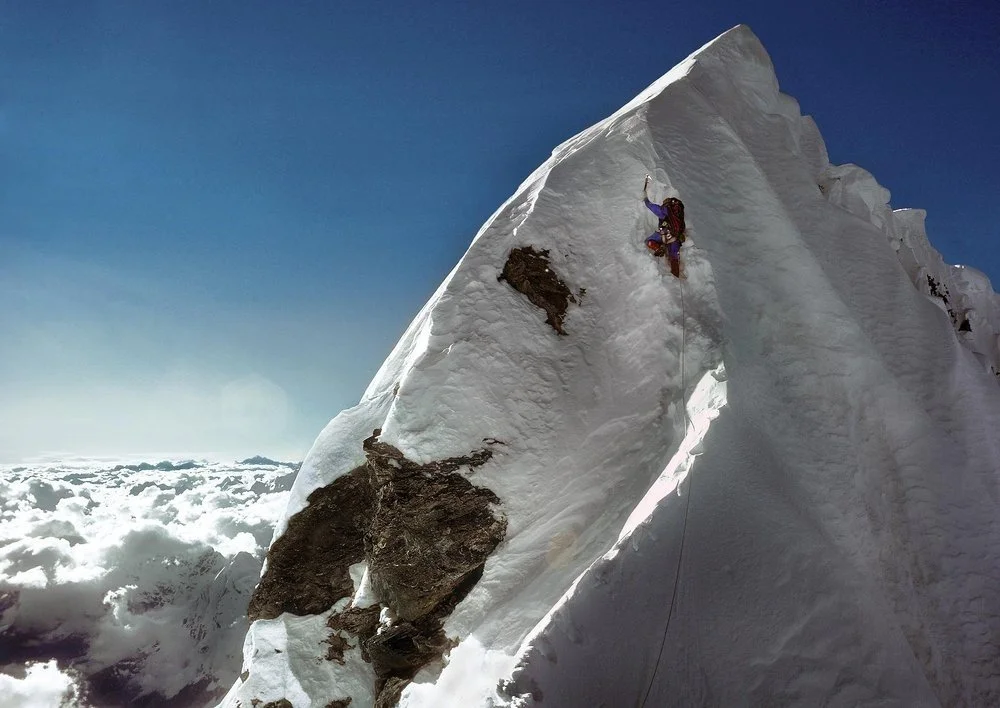
“Standing there, it felt as though you were part of something much bigger than yourself.” — Doug Scott, on the summit of Everest, 24 September 1975
Doug Scott didn’t just climb Everest. He climbed it by its hardest face — the formidable South West Face, unclimbed by any team before him — alongside Dougal Haston, in the autumn of 1975. They became the first Britons to stand on the summit of the world’s highest mountain.
But what defined Doug Scott wasn’t the summit. It was what he did next. Over four decades, he returned to Nepal again and again — not always to climb, but to give back to the Sherpa communities, the porters, the remote villages that had made his mountaineering life possible. He believed, deeply, that to take from the mountains without giving back was not acceptable. Community Action Treks was the vehicle for that belief.
The story of Doug Scott
Douglas Keith Scott is born on 29 May. He will go on to become one of the greatest mountaineers of the modern era — beginning, as all great mountaineers do, by climbing trees in his back garden.
Scott begins his lifelong love of remote mountaineering with a hitchhiking trip to the Atlas Mountains with friends from the Nottinghamshire Climbing Club. His expeditions will eventually take him across Asia, Africa and the Americas.
On 24 September, Scott and Dougal Haston reach the summit of Everest via the notoriously difficult South West Face — a route that had defeated every team before them. They become the first Britons to summit Everest, surviving an unplanned bivouac at 8,760 metres without oxygen or sleeping bags on the descent. No frostbite.
Descending the Ogre in Pakistan after its first ascent, Scott slips and breaks both legs at 7,200 metres. With rescue impossible at that altitude, he crawls on his knees through a storm back to base camp over four days. Chris Bonington later said: “I don’t think anyone except Doug would have had the physical and mental strength to make it down with two broken legs.”
Moved by conversations around expedition campfires — Sherpas and porters describing an industry that offered no security, no fair wages, no protection if they were injured or fell ill — Scott founds Community Action Treks. The principle is simple: trekking should directly benefit the communities it passes through.
Scott raises funds and installs 17 fresh water standpipes in Askole, the last village before K2. Infant mortality in the village falls by half. It is one of the first of what will become dozens of community development projects across the Himalaya.
Scott founds Community Action Nepal (CAN) as a registered UK charity, formalising the community development work that had been growing for years. In the same year, he is awarded the CBE for his services to mountaineering and charity. He will spend the rest of his life raising funds for CAN through lecture tours across the United Kingdom.
Scott receives mountaineering’s highest honour in Chamonix — only the third climber ever to receive it, following Walter Bonatti and Reinhold Messner. His personal style is described by the jury as “visionary.” He uses his acceptance speech to talk about Nepal.
Diagnosed with cerebral lymphoma in March 2020, Scott launches ‘Climb Everest’ during the first lockdown — asking people to climb their stairs at home and donate to CAN. He dons his original 1975 Everest gear and climbs his own stairs, raising thousands for medicines and equipment during Nepal’s coronavirus outbreak. He dies on 7 December 2020, aged 79. His charity work continues.
The principles that built this company
Doug was furious that trekking agencies in Kathmandu told Sherpas and porters they didn’t deserve fair wages because foreigners would tip them anyway. CAT was built to pay proper wages, provide proper clothing and food, and offer job security to the people who make these expeditions possible.
Every CAT trek sources food and supplies from the local communities along the route. The economic benefit of tourism should reach the villages, not just the operators. This was Doug’s position in 1989 and it remains our position today.
Directors of CAT have declined profit-sharing for decades. Surplus funds go directly to Community Action Nepal projects. When you book a trek with us, a portion of what you pay goes to a school, a health post, or a clean water project in a Himalayan village.
Doug believed that travellers and locals are equals. “We work on the principle that we are all on our separate journeys and no one is more or less important than the other.” That principle shapes how every CAT trek is run to this day.
What 37 years of giving back looks like
in Nepal
built or supported
installed in Askole
mortality in Askole
contributed since 1989
Community Action Nepal
Community Action Nepal (CAN) is the registered UK charity that Doug Scott founded in 1994. It operates independently of CAT, but the two organisations are inseparable in spirit. When you trek with us, you are directly supporting CAN’s work in the high Himalaya — the schools, health posts, clean water projects and porter welfare schemes that make life in these remote communities sustainable.
Building and maintaining schools in communities that would otherwise have no access to education. Staffed by local teachers, funded by trekkers.
Over 60 health posts serving thousands of isolated villages with basic healthcare. Staffed by local health workers trained by CAN.
Fresh water infrastructure in remote communities. The Askole standpipes were the first. Dozens of projects have followed across Nepal and Pakistan.
Rescue shelters, fair wages, proper clothing and food for the porters who carry loads at altitude. The issue Doug cared about most deeply.
To learn more about Community Action Nepal’s current projects, or to make a direct donation to the charity, visit their website.
Visit CAN → Donate to CAN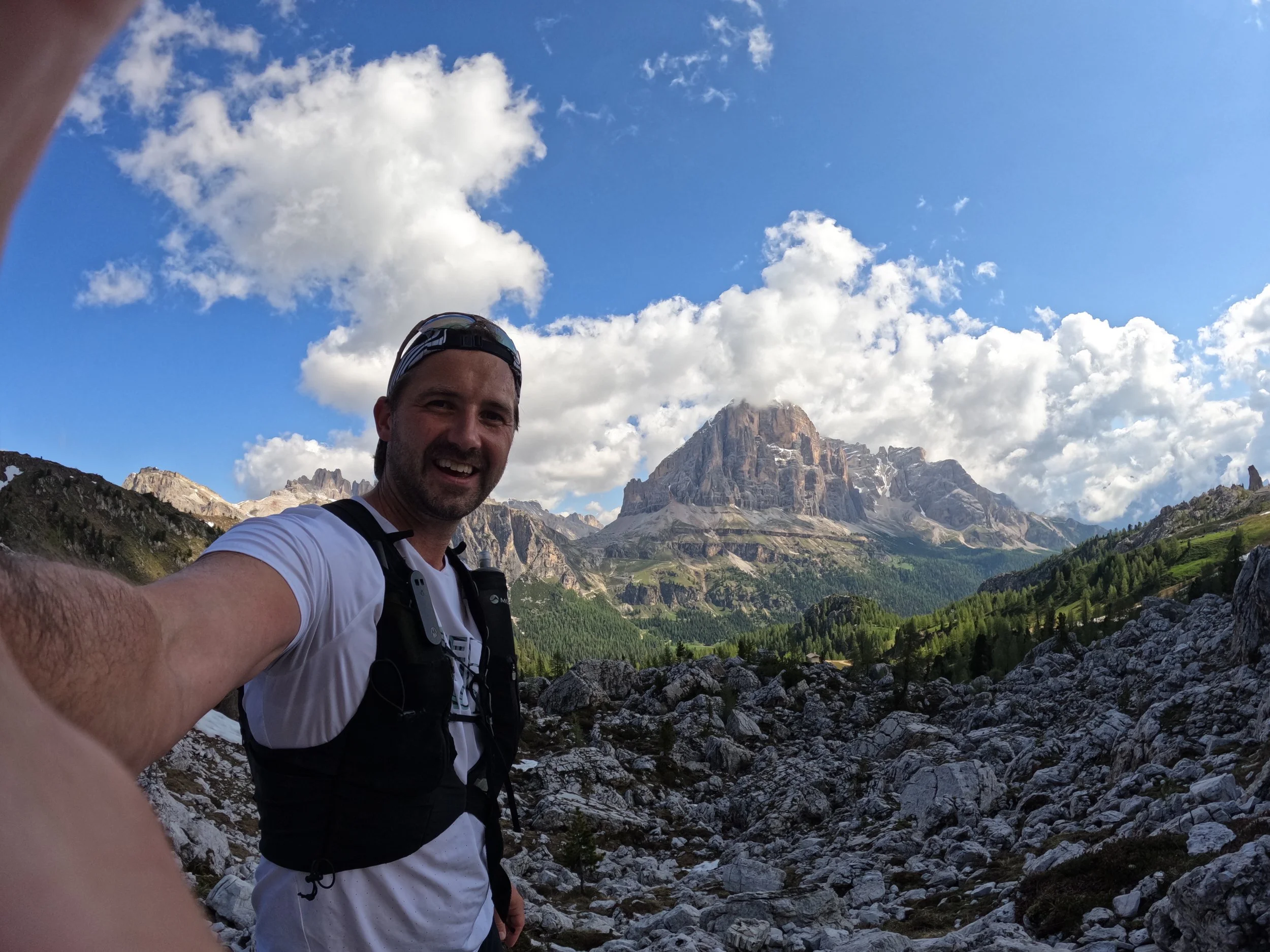
What this means to carry forward
“I didn’t take this on lightly. This is Doug Scott’s company. His name is on it. His values are in it. And the communities that depend on it are real.”
When I was offered the directorship of Community Action Treks, I sat with it for a long time. Not because I was unsure about wanting it — I knew immediately that this was something worth fighting for. But because I understood the weight of it.
Doug built something that mattered. Not just a trekking company, but a model for how adventure travel should work. The previous directors, many of them in their eighties, had kept the flame alive for years after Doug’s death. What they needed was someone with the energy, the commercial thinking, and the deep respect for the legacy to take it somewhere new.
My commitment is straightforward. The values don’t change. The community-first model doesn’t change. The relationship with CAN doesn’t change. What changes is that this company will grow again — with the investment in product, marketing and guest experience that it deserves — so that more people can trek in the Himalaya in the way Doug believed they should.
This is an honour. I don’t use that word lightly either.
The best way to honour the legacy is to walk it
Every trek we run carries Doug Scott’s principles. Expert Sherpa guides. Fair wages. Community benefit. The Himalaya, as they were meant to be experienced.