
Find the trek that’s right for you
We grade all CAT treks across three tiers based on altitude, terrain, daily walking duration and the level of physical and mental challenge involved. The grading system is designed to help you choose with confidence — not to put people off.
There is no required pace on any CAT trek. We cater for a range of fitness levels and always maintain a guide-to-guest ratio that means no one is ever left behind. What matters is the spirit you bring, not the speed.
Not sure which grade is right for you? Book a free call and we’ll talk it through honestly.
A genuine Himalayan experience without the extreme altitude.
The Moderate grade is ideal for trekkers who want a real taste of Nepal — authentic mountain environments, genuine Sherpa hospitality, and spectacular scenery — without the demands of high-altitude circuits. These treks stay at lower elevations, involve shorter daily stages, and require a moderate but not exceptional level of base fitness.
If you’ve walked multi-day routes in the UK or Europe, you are ready for a Moderate grade CAT trek. No previous Himalayan experience is required.
Walking with a light daypack on generally well-defined trails
Altitude awareness required; acclimatisation days included
Mountain paths, forest trails, some ascent and descent
Simple but comfortable; communal dining; basic bathroom facilities
Multi-day walking experience helpful but not essential
Comfortable with a day of walking on consecutive days
The Himalaya at full intensity — but within reach of most fit trekkers.
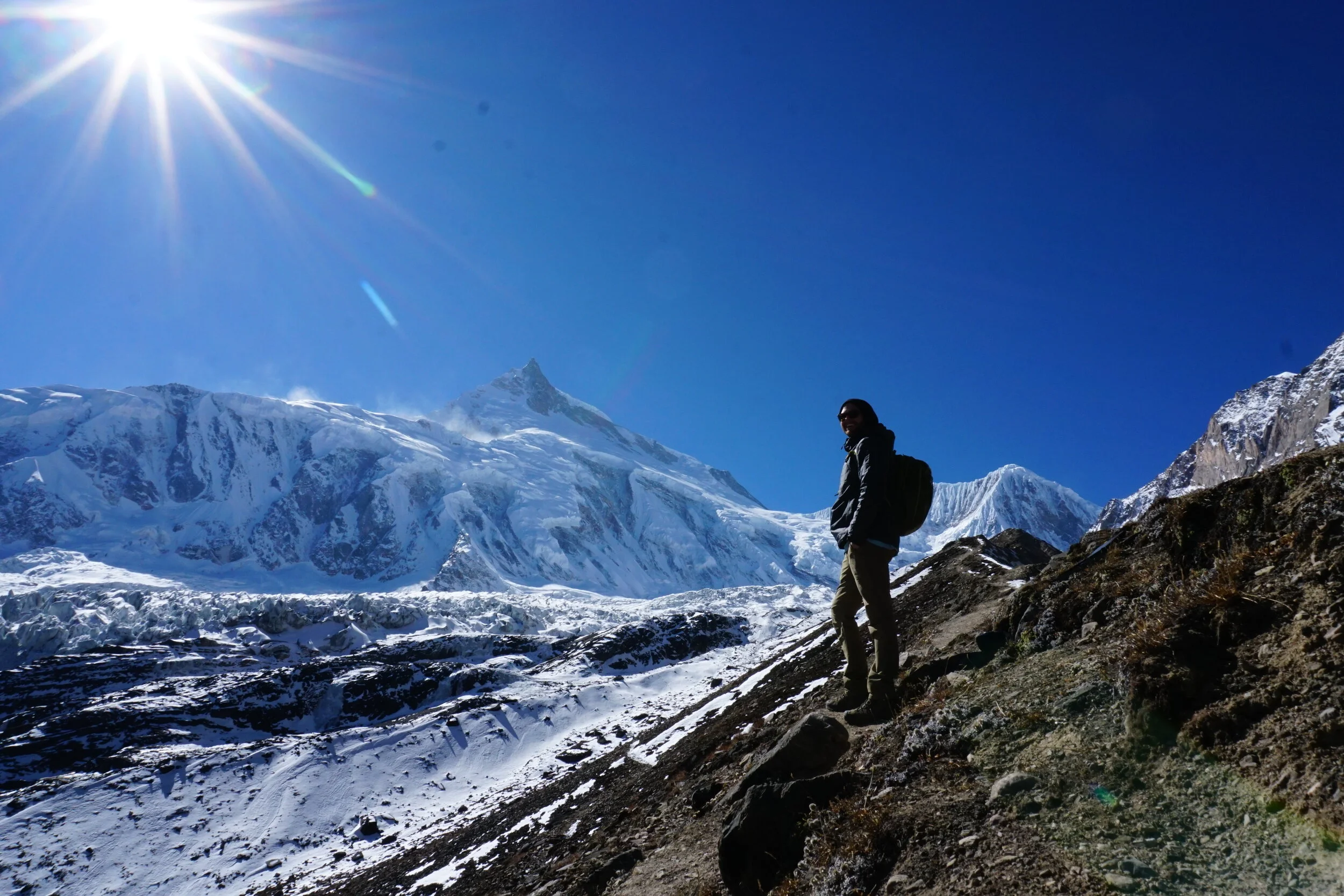
Demanding grade treks are the heart of the CAT portfolio. These are the iconic routes — Everest Base Camp, the Manaslu Circuit — that require a solid base of fitness, comfort with sustained uphill walking on consecutive days, and a willingness to operate at altitude above 4,000m.
You don’t need to be an athlete. You do need to have been training consistently in the months before departure and be comfortable walking 5–8 hours per day on rough mountain terrain. Previous experience in the Alps, Pyrenees or Scottish Highlands is a strong indicator of readiness.
On rough mountain terrain with significant elevation gain on most days
Dedicated acclimatisation days built in; altitude sickness monitoring daily
Rocky paths, steep ascents, some exposed ridgelines and glacial moraine
Simple and basic in remote sections; sleeping bag essential throughout
Previous experience in mountain environments strongly recommended
Consistent training for 8–12 weeks before departure recommended
Real Himalayan summits above 6,000m. Technical skills required. No shortcuts.
Expedition grade covers the CAT Summits tier — trekking peaks above 6,000m requiring technical mountaineering skills: crampons, ice axe, fixed ropes and jumar technique. These are not standard treks. They are Himalayan climbing objectives that happen to be achievable without full expedition permits.
Island Peak (6,189m) and Mera Peak (6,476m) are the most accessible entry points. The Khumbu Explorer combines Lobuje East, Everest Base Camp and Island Peak in a single 29-day expedition — two summits, one of the most ambitious itineraries in the CAT portfolio. All require winter mountaineering skills as a prerequisite, not something learned on arrival.
Guests who complete Expedition grade objectives consistently describe them as the most significant experiences of their lives. We believe them. We also believe in being honest about what it takes to get there — if you enquire and we don’t think you’re ready, we will tell you so.
Summit days are long alpine starts; approach days are more moderate
Multiple acclimatisation days; pulse oximetry monitoring; emergency O² carried
Crampons, ice axe and jumar on fixed ropes — must be second nature before arrival
Lodge on approach; high camp tents provided for summit push. Sleeping bag −20°C essential
UK winter mountaineering course (Cairngorms or equivalent) strongly recommended before booking
Back-to-back mountain days with elevation gain; summit day requires sustained effort above 6,000m
CAT Summit peaks reach altitudes of 6,189–6,476m. Comprehensive travel insurance with helicopter evacuation cover to at least 7,000m is non-negotiable. Technical equipment — crampons, ice axe, harness and jumar — must be supplied by you and must be familiar before arrival. Altitude sickness can affect anyone regardless of fitness; our Sherpa climbing sirdars monitor every guest daily and carry emergency oxygen throughout.
Book a free 15-minute call and tell us about your trekking background and fitness. We’ll tell you clearly which grade suits you — and if we think you’re not ready for a particular trek, we’ll say so. No sales pressure. Just an honest conversation.
Browse our 2026 & 2027 departures
Every trek listing shows its grade clearly. Filter by grade to find the right challenge for where you are right now.